

The Quiet After the Holidays

January arrives without ceremony.
The decorations come down. The guests leave. The noise recedes. And what’s left is a kind of stillness that can feel grounding — or unsettling — depending on how closely you’re paying attention.
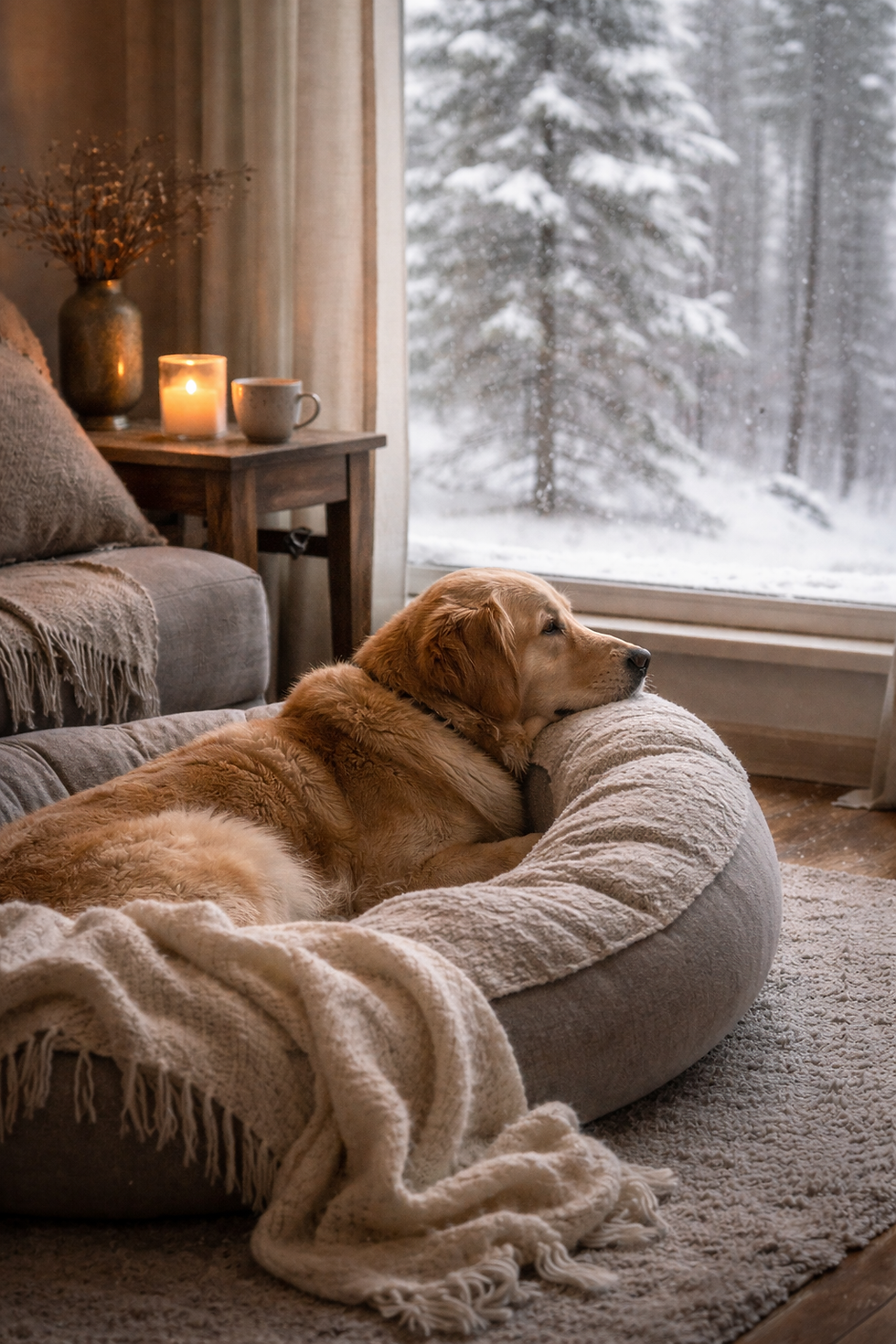
For pets, that shift is often sharper than we realize.
The holidays bring disruption disguised as celebration: different schedules, unfamiliar visitors, altered routines, heightened energy. Even dogs who tolerate change well often hold it together through December, only to show signs of stress once the house goes quiet again.
This is the quiet after the holidays.
And it’s where care matters most.
When the Holiday Stimulation Drops, the Nervous System Speaks
Calm doesn’t always arrive when things slow down.
For some dogs, January brings relief. For others, it brings confusion. The sudden absence of activity can feel like a loss of structure — especially for animals who rely on predictability to feel safe.
You may notice:
restlessness where there was once distraction
clinginess after weeks of company
sensitivity to small changes that didn’t register before
None of this is misbehavior. It’s information.
The nervous system is recalibrating.
Why January Asks for Gentle Care
Northern Michigan winters don’t ease up after the holidays. The days are still short. The cold is still present. And the rhythm of life narrows in ways that affect everyone — humans included.
January care is about rebuilding rhythm, not adding stimulation.
It looks like:
returning to consistent walk times
quieter outings with fewer expectations
familiar routes instead of novelty
letting routines do the regulating
This isn’t the moment to “fix” anything.
It’s the moment to hold steady.
Dogs Feel the Quiet — So Do We
Humans aren’t immune to this shift.
After weeks of movement and obligation, January exposes what’s underneath: fatigue, grief, relief, or simply the need for less. Pets often mirror this transition, responding not to what we say, but to how settled we feel in our own bodies.
When we slow without guilt — when we allow the season to be what it is — nervous systems soften together.
Care becomes mutual.
This Is Where Experience Shows
Anyone can manage care during high-energy moments.
Experience shows in the quieter ones.
In recognizing that January isn’t empty — it’s integrative. That stillness isn’t a problem to solve, but a phase to support. That calm doesn’t need to be engineered when safety and consistency are already in place.
At Northern Paws, this is how we approach the season.
Not with urgency. Not with pressure. But with steady, regulated care — especially after the noise fades.
✍️ Author’s Note
About The Care Edit
The Care Edit is a recurring editorial column from Northern Paws Pet Care exploring what thoughtful, modern animal care looks like beyond obedience and performance. Rooted in nervous system science, seasonal awareness, and real-world experience, this column reflects our belief that calm is supported — not enforced.
Here, we write about care as it actually happens: in the quieter moments, the transitions, and the spaces in between.


Comments