

How to Know When It’s Time: Understanding Pet Euthanasia and End-of-Life Care

Few decisions weigh heavier on a pet parent’s heart than deciding when to say goodbye. At Northern Paws Pet Care, we know this is not just a “medical moment” — it’s a profoundly emotional passage filled with love, guilt, and the desire to do right by your best friend.
Our goal is to help you understand what euthanasia is, what the end-of-life process looks like, and how to recognize when your pet’s quality of life is declining. This will help to prepare yourself and your family for a peaceful goodbye.
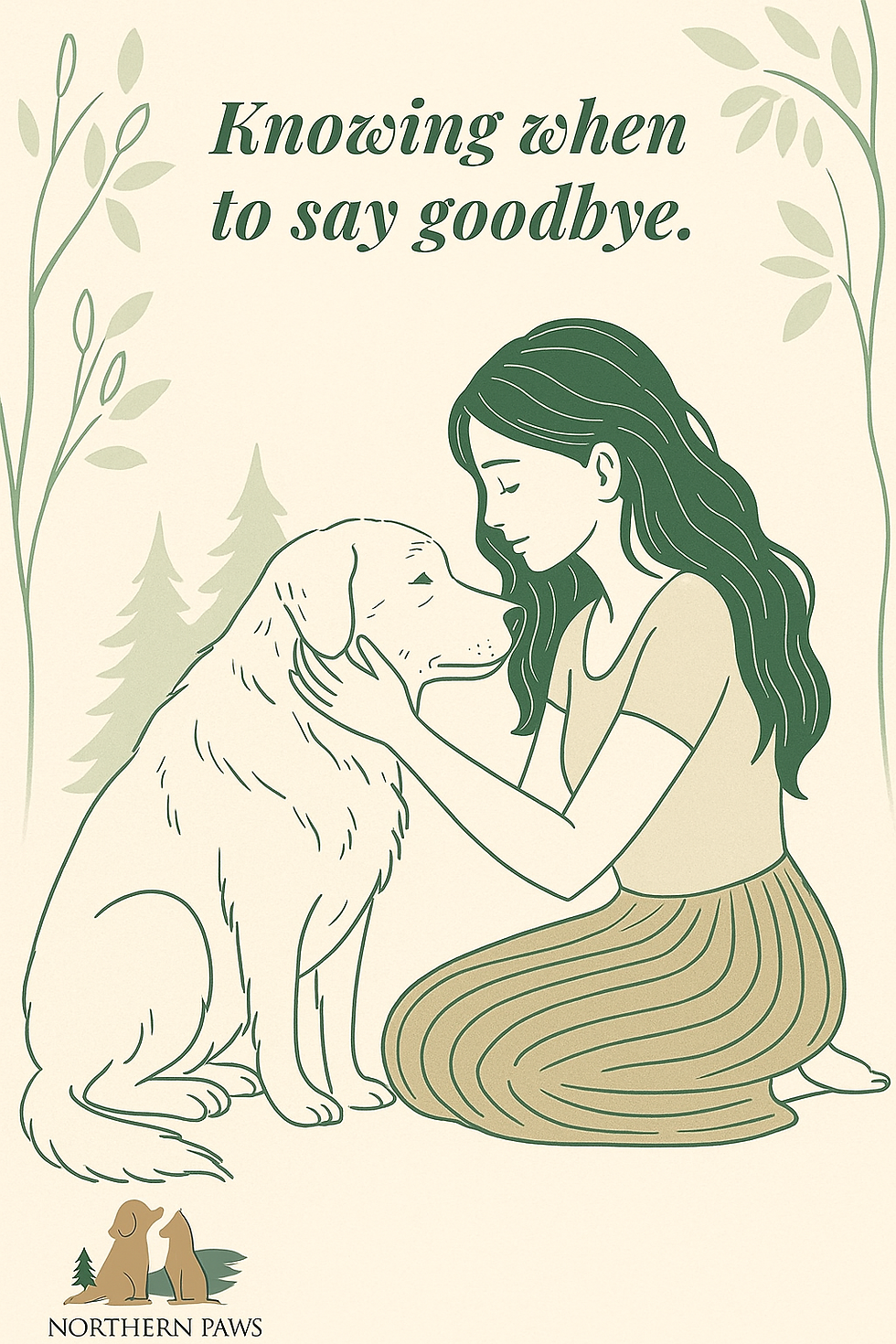
💛 What Is Euthanasia?
The word euthanasia comes from the Greek for “good death.” In veterinary care, it means providing a gentle, painless, and humane passing when a pet’s suffering outweighs their ability to enjoy life.
It is a final act of love — not giving up, but letting go with grace and compassion.
🕰️ How Do You Know When It’s Time?
There is rarely one single moment when “it’s time.” Instead, there’s often a slow change in daily joy, comfort, and energy.
Here are some questions to help guide your decision:
Does my pet still eat, drink, and respond to affection?
Can they move around without significant pain?
Are they still interested in their favorite people or activities?
Are there more bad days than good days?
Veterinarians often use a quality-of-life scale to assess your pet’s daily mobility, appetite, hydration, and overall happiness. Writing this down can help you see patterns with less emotional fog.
When pain, confusion, or exhaustion become the norm, helping them find peace may be the kindest gift you can give.
🩺 What the End-Of-Life Process Looks Like
Veterinary euthanasia is peaceful, quick, and pain-free.
Most veterinarians first administer a sedative to help your pet relax or fall into a deep sleep. When you’re ready, a second injection allows the heart to stop gently — usually within seconds.
You can hold them, speak softly, or rest your hand on them. Many owners describe it as “watching their pet drift into sleep.”
🏡 At-Home or at the Clinic?
This really depends on your pet’s personality and your comfort level.
At Home: Many families opt for this option to avoid stress and let their pet rest in a familiar environment surrounded by familiar smells and people.
At the Clinic: Veterinarians and staff can provide support, explain each step, and handle aftercare with respect.
What matters most is creating calm and love — wherever it takes place.
💐 Preparing for Goodbye
There is no “right” way to prepare — only the way that feels gentle to you.
Spend quiet time together. Let them rest near you or soak in the sun.
Share their favorite meal, toy, or walk.
Create a ritual — a candle, a blessing, or words of thanks.
Children can be included by writing letters, drawing pictures, or sharing memories. Pets sense our emotions — your calm presence helps them feel safe.
🌈 Aftercare & Grieving
After the procedure, you can choose cremation, burial, or keepsakes like paw prints, fur clippings, or engraved urns.
Grieving takes time — and it’s normal to feel sadness, guilt, or even relief that your pet’s pain has ended. Every emotion is valid.
🕊️ Northern Paws Pet Loss Support
At Northern Paws Pet Care, we understand that loss doesn’t end when the goodbye is over. That’s why we offer Pet Loss & Grief Support Sessions — a compassionate space to process emotions, honor your bond, and begin healing.
Whether your loss was recent or years ago, you’re not alone. We’ll walk beside you — with empathy, understanding, and care rooted in the deep love we share for animals. 💛
If you’re facing this decision, please don't hesitate to reach out.
We’re here to help you navigate with grace, information, and gentle support.

Comments